
10 Best Local Dishes from Marseille
Real Dishes Locals Love in Marseille
The best Marseille foods and drinks feature flavours typical of Provence. Many people have heard of the city’s fragrant fish soup – bouillabaisse – as well as the delicious olive tapenade and strong pastis, and that’s just for starters. Sun-drenched Marseille has many foods to offer to satisfy your gourmet desires.
The foods you can try in Marseille are made of Mediterranean fish, colourful local vegetables, the highest quality olive oil, and famous Provençal herbs and spices. You’ll find seafood and meat dishes, vegan meals, and also sweet delights served in local restaurants or street kiosks. Select any of the foods listed below to enjoy the inimitable flavours of Marseille.
1. Bouillabaisse
The iconic Marseille soup

适合: 餐饮
Bouillabaisse is the most famous dish originating from the port of Marseille. This tasty seafood soup started as an ordinary meal of poor local fishermen, and today it’s served in many restaurants, including the Michelin-starred ones. For the genuine local experience, try not to spend too much on your soup.
Expect a thick, creamy broth made with a variety of white bony Mediterranean fish, shellfish, vegetables, and a fine selection of Provençal herbs and spices. The soup has a creamy texture and a salty, seafood taste. Traditionally, the fish and vegetables are taken out of the broth and served separately. You’ll also get a rouille (spicy red-orange sauce) with slices of grilled country bread to accompany your bouillabaisse.
2. Tapenade
A traditional Provençal appetiser
适合: 餐饮
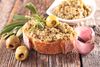
Tapenade is a very popular appetiser in Southern France. While crushed olive sauces have existed in the Mediterranean area since ancient times, the specific tapenade recipe originated from Marseille in 1880.
Tapenade consists of black or green olives, capers, anchovies, olive oil, and spices. The name comes from the Occitan word for capers, as it was the ingredient that made the appetiser different from other recipes. You can enjoy tapenade as a dip spread on toasts, as a stuffing in baked goods or as a sauce to soak bread and vegetable sticks in.

3. Pastis
An iconic Provençal spirit
适合: 餐饮
Pastis is an anise-flavoured aperitif and as much a symbol of France as the baguette and petanque. The 40–45% ABV drink became popular in the 1930s in Southern France, especially in Marseille. The name comes from the Occitan word meaning “mixture”, and in Marseille, the drink is nicknamed pastaga.
Grab a pastis at a local Marseille café as a refreshment on hot days. It’s usually served with a jug of cold water and ice cubes. Add 5 measures of water for each measure of pastis. The drink will change in appearance from transparent to a milky soft yellow. Sip slowly and savour the anise and Provençal herbs flavours in this drink.
4. Navettes
Orange blossom Marseille biscuits
适合: 餐饮
Navettes are traditional boat-shaped cookies from Marseille. Even if the word ”navette” in modern French means a shuttle bus, it once evoked the sea. The boat shape is said to commemorate Mary Magdalene and Saint Martha and their boat trip to Marseille 2,000 years ago.
In the centre of Marseille, you can try the typical orange-flavoured navettes from the city’s oldest bakery – Four des Navettes. They have kept their recipe a secret for generations. Traditional navettes have an orange blossom taste, but you can also find modern varieties with chocolate, vanilla, lavender, cinnamon, and spicy flavours.
5. Grand aioli
Garlic-spiked Provençal speciality
适合: 餐饮
Having origins in Roman times, aioli is a garlic mayonnaise-style sauce commonly used in Provençal cuisine. Its ingredients include olive oil, egg yolks, and lemon juice. Aioli is part of one of the most popular meals in Marseille called the grand aioli.
The dish consists of a selection of colourful boiled vegetables such as artichokes, carrots, potatoes, zucchini, as well as salt cod and hard-boiled eggs served together with the aioli sauce. It can also be paired with escargots, small boiled octopus, and canned tuna. This room-temperature dish is a great choice for a warm spring or summer dinner.
6. Chichi frégi
Great for snacking on the go
适合: 餐饮
Chichi frégi is a type of street food from l’Estaque, a district of Marseille. Back in the 1930s, the workers of the tile factories there invented and popularised this sweet treat. Chichi frégi consists of wheat and chickpea flour, orange blossom water, and olive oil. It can be eaten plain or rolled in sugar or covered with whipped cream.
Don’t mention to locals that this long doughnut tastes similar to a churro, a type of fried dough! It’s very airy and longer than the Spanish snack. If you have a sweet tooth, head over to one of the kiosks in the l’Estaque district, just opposite the seafront.
7. Panisse
Delicious Provencal pancakes
适合: 餐饮
Panisse is a type of chickpea flour pancakes originating from Marseille’s l’Estaque district. It’s believed that Italian workers brought their chickpea bread into the region back in the 1930s. The typical ingredients include chickpeas flour, olive oil, water, salt, and pepper.
Gluten-free and vegan, panisse will please you with a smooth silky texture and a crispy crust. Cut into almost any shape, they are usually sold by dozens in small paper wraps in the streets or take-away restaurants. You can enjoy it as an appetiser to dig into dips, or as a side dish with meat, seafood, and salads.
8. Pieds paquets
A unique Provençal meat dish
适合: 餐饮
Pieds et paquets (feet and packets) is a meat speciality from Marseille and Sisteron. You can find it in just about every local restaurants in Marseille. The dish is prepared with stewed lamb’s feet and tripe stuffed with salt pork, garlic, onions, and persillade (a sauce made of parsley). All ingredients need to be stewed for at least 7 hours.
The long preparation makes for a tasty result. The meat is so tender, it practically melts in the mouth. Pieds et paquets is usually served for special occasions and big family reunions. Don’t forget to ask for a glass of red French wine to accompany this delicious meat dish.
9. Picon
Caramel-coloured bitter born in Marseille
适合: 餐饮
Picon was invented in Marseille but is actually more popular in the north of France than in the south. Created in 1932, this strong orange-flavoured bitter was used to treat malaria. To this day, it is still produced in its Marseille factory.
Picon is a combination of neutral alcohol, caramel, orange zest, cinchona, sugar syrup, herbs and spices. It’s typically mixed with beer to water down the very strong and bitter taste. You can also mix picon with white wine or as part of a cocktail.
10. Poutargue
Mediterranean fish eggs delicacy
适合: 餐饮
Poutargue (or boutargue) is a speciality made of salted and dried eggs of mullet caught in the Mediterranean Sea. Originating from the commune of Martigues, near Marseille, it is an artisanal favourite and a luxury product.
Each poutargue is presented in the form of a sausage wrapped in wax. You can try it on its own by thinly slicing it. Alternatively, you can use it as an ingredient in pasta dishes. Like truffles, poutargue pairs well with simple dishes. You can easily store it in the fridge for about 6 months.

本文包含 Go Guides 编辑团队的意见。Hotels.com 好订网对作者出现在本网站上的文章给予补偿;此类补偿可能包括差旅费和其他费用。